


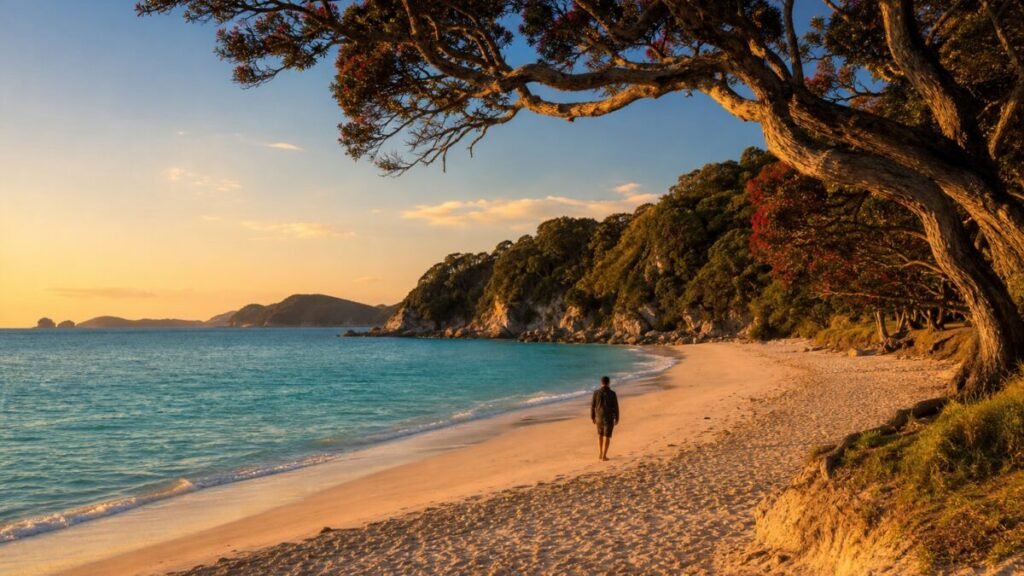
The Coromandel Peninsula on the east coast of the North Island has 400 kilometres of spectacular coastline, featuring vast white and golden sand beaches, along with plenty of private coves. The region sits 2 hours 40 minutes from Auckland and combines accessible attractions with remote northern reaches that reward those willing to drive narrow gravel roads.
Getting there and getting around
From Auckland, the journey takes around two and a half hours, following State Highway 2 and then branching off towards Thames. State Highway 25 is the main artery around the peninsula. Many of the roads are narrow and winding and, off State Highway 25, generally unsealed. Allow extra time for travel as journeys often take longer than the distance suggests.
The 309 Road is a 22-kilometre gravel road between the towns of Coromandel and Whitianga, winding its way from Coromandel, on the west side of the peninsula, over the ranges to Whitianga, on the eastern side.
Hire a car in Auckland before you go, since public transport barely touches this part of the country. Public transport is limited, though seasonal shuttle services and guided tours operate between key towns during the summer months.
Cathedral Cove and Hahei
As of early 2026, the walking tracks remain closed due to significant landslip activity, but fortunately you can still visit this beautiful area via a boat tour with Hahei Explorer or a guided kayak trip. Paid parking is available at Cathedral Cove Gateway Trail car park at 150 Lees Road, Hahei.
The Cathedral Cove Track is a coastal walk through native bush, leading to one of the Coromandel’s most iconic sights – a natural rock archway carved by the sea. Check conditions before you go, as the track reopened January 2026 and closes after heavy rain.
Browse Tours & Activities and Accommodation options in the area on the Coromandel directory.
Hot Water Beach
Hot Water Beach on the Coromandel Peninsula has geothermal springs beneath the sand. It is a thermal anomaly – a beach where geothermal springs emerge directly through the sand.
Hot Water Beach is only interesting within 2 hours either side of low tide. Reliable places to check tide times include NIWA’s tide forecasts, tides4fishing.com and Surfline, and the Hot Water Beach Store posts the day’s tide times too. Spring tides around the new and full moon give the biggest range, which means lower water and a bigger digging window.
Aim to arrive about an hour before low tide to claim a spot and start digging. Check the local tide times and aim to arrive an hour or so before low tide. Bring a spade to dig into the sand where hot water wells up. Check tide predictions before you leave—if you arrive at high tide, the thermal area is completely underwater.
Northern Coromandel and the Coastal Walkway
The coastal walk between Stony and Fletcher Bays crosses farmland and goes through coastal forest with views of the Pinnacles, Great Barrier Island (Aotea Island) to the north and Cuvier Island (Repanga Island) in the east. The coastal walk takes 7 hours return and is 20 km return.
Port Jackson is one of the remote northern spots. The drive takes time, but the reward is a huge sweep of coast with very little development around it. The Port Jackson DOC Campsite is a no-frills camping spot in an absolutely gorgeous location. Located right next to Port Jackson Beach at the northwestern tip of the Coromandel Peninsula, this is a great place to camp if you want to escape into nature.
Walks and forests
The Kauaeranga Kauri Trail leads to Pinnacles Hut, and on to the summit of the Pinnacles with spectacular views of the Coromandel Peninsula. It can be completed as a day or overnight walk. Follow an historic packhorse route used by kauri bushmen in 1920s.
Several walks lead to historic relics including the Broken Hills battery site, an underground jail, and underground mine tunnels such as the 500 m long Collins Drive (Golden Hills Mine area) which you can walk through – remember to bring a torch.
Browse the Coromandel section and Tours & Activities for local guides and walk operators.
Towns and culture
Driving Creek Railway began as potter Barry Brickell’s practical way of moving clay and timber around his property and evolved into one of the Coromandel’s quirkiest attractions.
Coromandel Town has a thriving arts and crafts community – ceramics, woodcarving, pounamu (greenstone) work, textiles, and local produce. The Saturday market on Kapanga Road draws peninsula artisans and is genuinely excellent for quality NZ-made gifts.
Visiting places like the Coromandel Goldfields Centre and the Thames School of Mines will give you a fascinating glimpse into the past.
Browse Food & Wine and Attractions in the Coromandel directory for local businesses and dining.
Beaches
Cooks Beach is a wide, family-friendly beach, with Shakespeare Cliff lookout offering an incredible view over Mercury Bay and the discreet Lonely Bay. Whangamatā is a lively beach resort, known for surfing and access to Donut Island (Whenuakura Wildlife Sanctuary).
You can go kayaking around the coastline, try your hand at fishing, or even take a scenic flight for a bird’s-eye view of the area.
Where to stay
Base yourself differently depending on your travel style: Whitianga for families, Hahei for beach bums, and Coromandel Town for arts and forest.
In the Coromandel, you must be in a certified self-contained vehicle to freedom camp. Tents and non-self-contained vans are not allowed in designated freedom camping areas. The Thames-Coromandel District Council has maps of permitted spots, and many have a maximum two-night stay. See the guide Freedom camping in New Zealand: the 2026 rules for more details.
Book Accommodation ahead during the summer season, as popular spots fill quickly.